
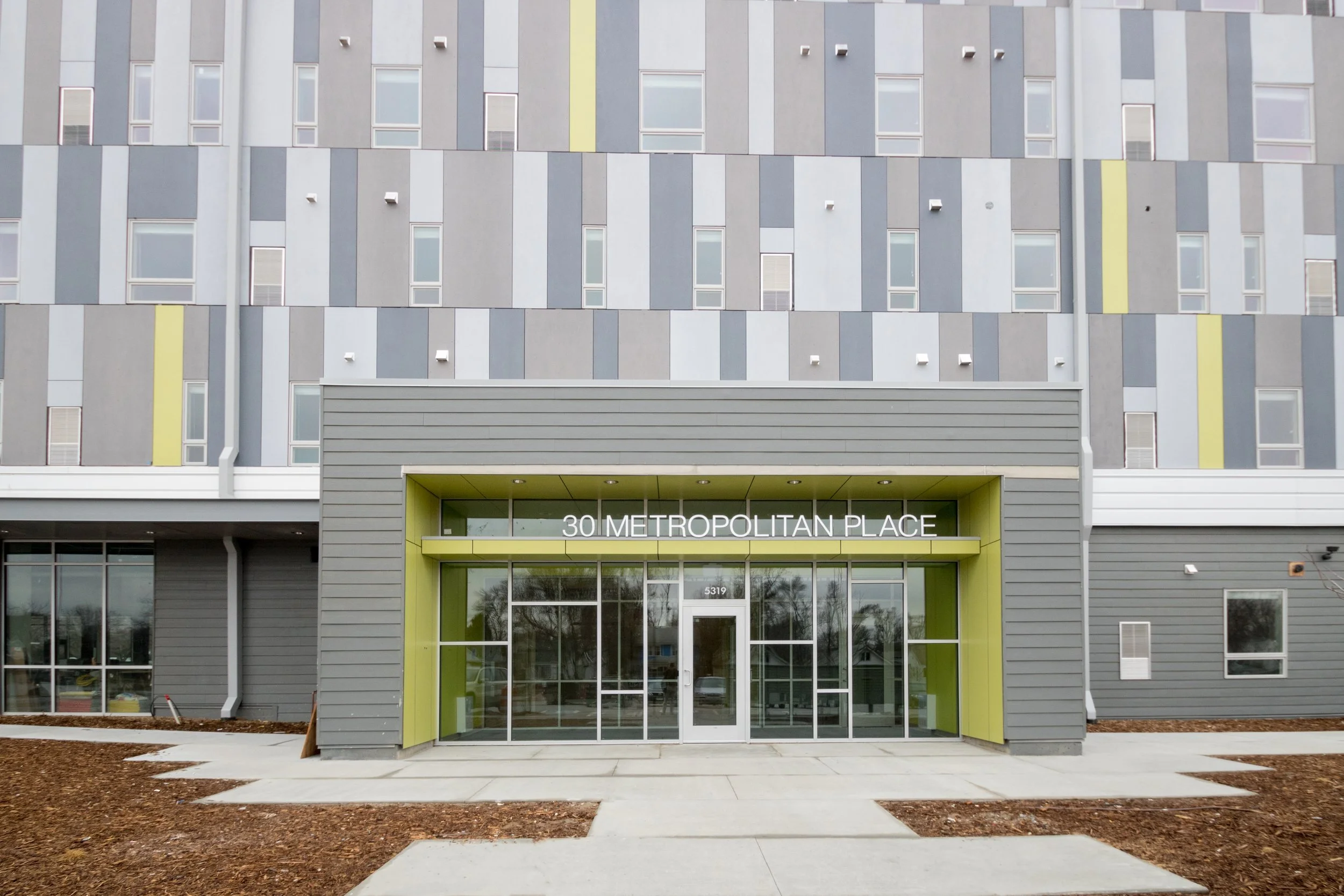
For years, if you asked someone in North Omaha what was on the corner of 30th and Fort, they'd tell you about MisterC's, a neighborhood eatery where generations of Omahans grabbed a meal on their way to or from the day's business. It was the kind of place people used as a landmark for directions; everyone just knew where it was.
Then it closed. And for a while, that corner sat as so many corners in North Omaha had before it. Vacant. Another quiet gap in a neighborhood that had gone years without meaningful new investment.
Today, that same corner is home to 110 families and organizations that support the community.
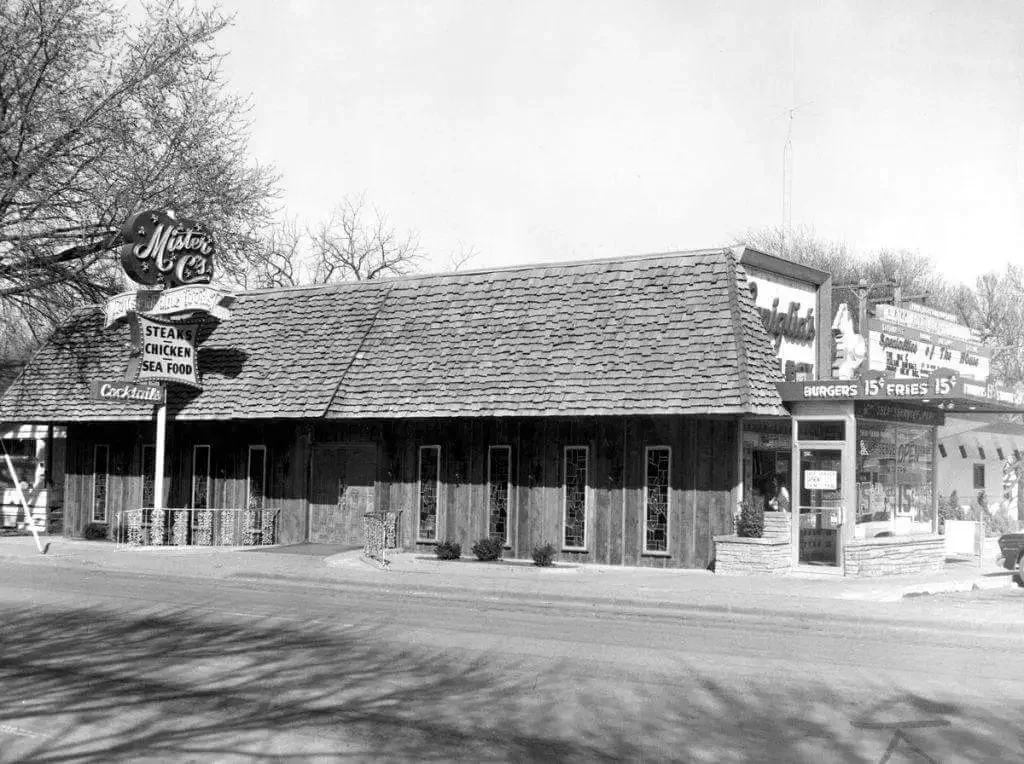
Mister C's Restaurant stood at 5319 N. 30th Street from 1953 to 2007, a North Omaha landmark for 54 years before White Lotus Group acquired the site in 2013, later becoming home to 30 Metro.
A Neighborhood That Needed More
By the time White Lotus Group began taking a serious look at this site, our research was pointing to a clear need in the community. The surrounding area had a poverty rate nearly twice that of Douglas County overall, and most new multifamily development in Omaha was happening in the south and west parts of the city, while the northeast side of the metro, where this corner is located, had seen very little. Nearby income-restricted housing was limited mostly to small, aging properties, many with fewer than 30 units, leaving families with modest or fixed incomes with few options for housing that felt like the community had made room for them, rather than settling for whatever housing was available.
At the same time, Metro Community College's Fort Omaha campus, just across the street, was in the middle of a $90 million expansion, growing its enrollment with zero on-campus housing to show for it. Students, especially non-traditional and part-time students, were commuting in from across the metro because there was little to no available housing nearby to actually live.
Two problems. One corner. One answer.
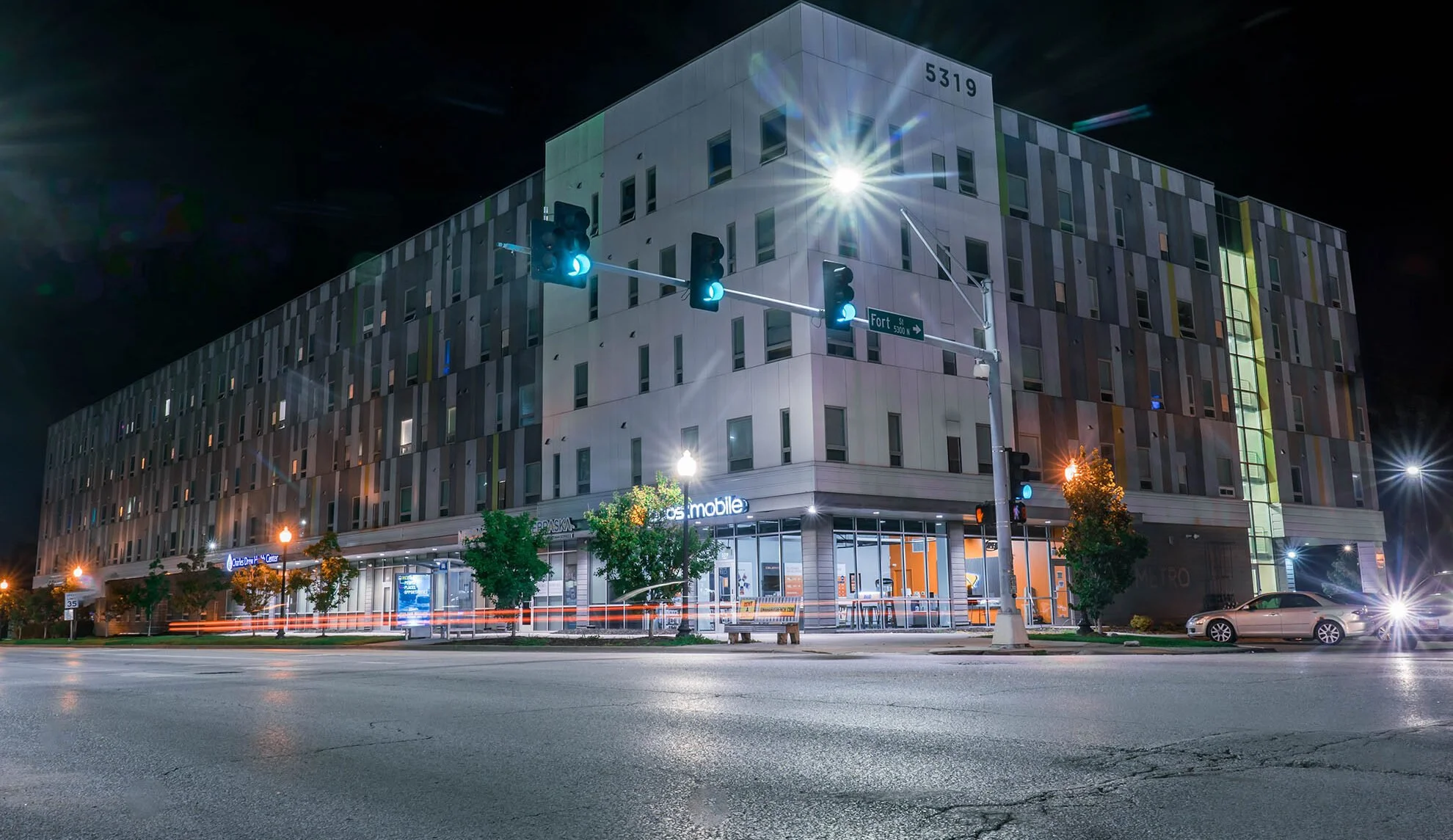
Five stories, 110 homes, and a health clinic, DHHS office, and more. All on one North Omaha block.
Building 30 Metro
White Lotus Group redeveloped the site into 30 Metro (30 Metropolitan Place): a five-story, roughly 113,000-square-foot mixed-use building representing a $20 million investment in the neighborhood. The project was financed in part through Douglas County Housing Authority Multifamily Housing Revenue Bonds and Low-Income Housing Tax Credits; the kind of layered public-private financing that makes truly affordable housing possible in markets where it wouldn't otherwise pencil out.
The building delivers 110 apartments (a mix of one- and two-bedroom units) restricted to households earning 60% or less of the area median income. But the idea was to make sure residents had access to the same kind of thoughtful, desirable amenities as those living in market-rate apartments, with controlled entry, in-unit washer/dryer, walk-in closets, a rooftop deck, and outdoor green space that feel attainable, welcoming, and built with the same level of care.
Street level was built, thoughtfully, for the neighborhoods. Today it houses a Charles Drew Health clinic, giving nearby families access to care without a long commute and a Nebraska Department of Economic Development field office serving North Omaha. A student living upstairs can walk to class next door. A parent can walk their kid to a health appointment downstairs. A neighbor can access state services without crossing town.
The project reached completion in March 2018. Since then, 30 Metro has stitched housing, healthcare, education, and public services back into a single walkable block.
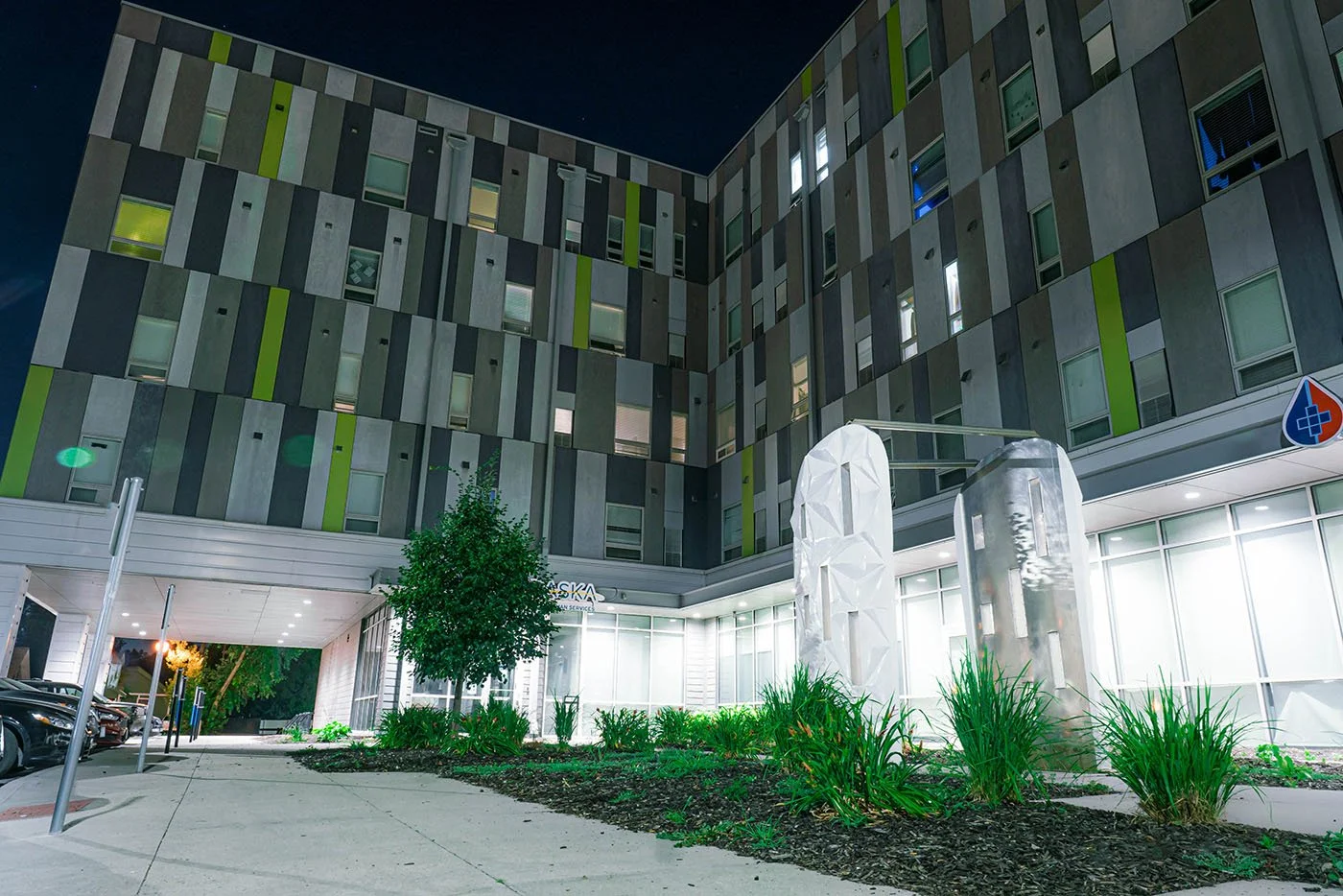
Icona (meaning "icon" in Italian) pays tribute to Mister C's, with crystal-inspired walls, illuminated windows, and color-changing LEDs that echo the restaurant's famous glow. Created by a North Omaha community member who once worked at Mister C's.
A Sculpture That Remembers
Walk the grounds today and you'll find "Icona," a public art piece designed by Omaha artist Justin Queal, whose own first job as a "North O" kid was at Mister C's. The name means "icon" in Italian, a fitting tribute to a restaurant that was exactly that to this neighborhood. Its geometric, crystal-like form echoes Mister C's own Piazza de Maria courtyard, the white crystal rock walls, fountains, and colorful lighting that once anchored the restaurant's famous "Party Garden." Visitors can walk through its illuminated interior, and its window openings recall the restaurant's "Italian Village," a wall where family, loved ones, and local figures were once honored with their likeness in a lit window. At night, color-changing LEDs bring back the same warm glow Mister C's was known for.
The design carries a second layer, too: its triangular motifs echo Metro Community College's own logo, tying the site's past directly to what it's become, a home built for the students and neighbors who live and learn on this corner today.
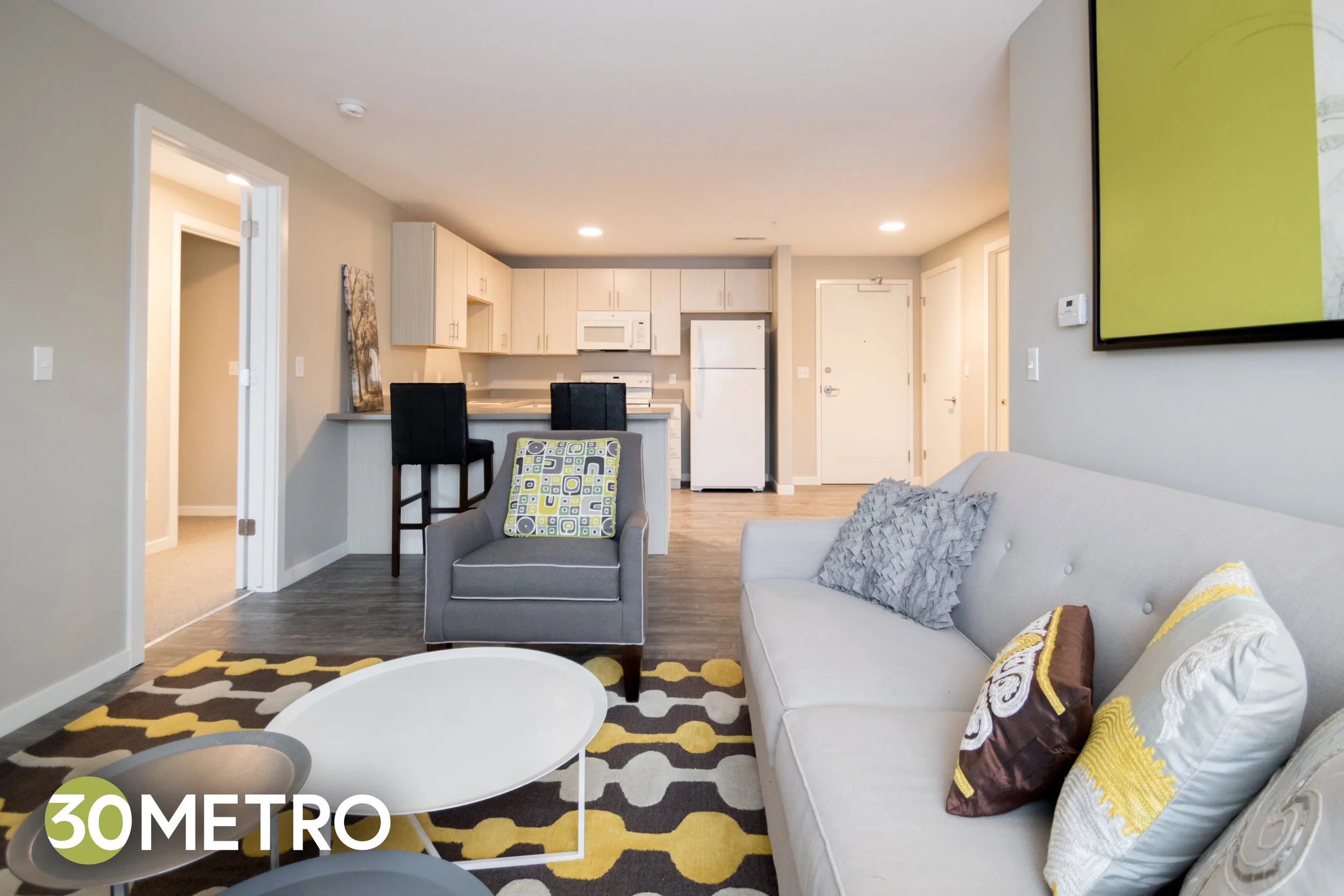
This is what affordable housing should look like: in-unit laundry, walk-in closets, and a view of the neighborhood it serves.
Why This Corner Matters
It's easy to talk about affordable housing in the abstract. Unit counts, AMI thresholds, financing stacks. What's harder to capture is what it means for a corner that used to be defined by what used to be there to become defined by what's there now: 110 households who have a home, a health clinic that didn't exist before, and a direct line to the services families actually need.
That's the thread that runs through this project and others like it: revitalization isn't just about replacing a building. An honest, thoughtful developer will read what a neighborhood is missing, whether housing, healthcare, or opportunity, and build all of it in, together, on the same block where people already live, work, and study.
The corner of 30th and Fort still holds the memory of MisterC's. It just holds a lot more now, too.
White Lotus Group is a vertically integrated real estate development firm based in Omaha, Nebraska, founded in 2003 by Arun Agarwal. The firm has led a diverse range of projects across multifamily, mixed-use, governmental, hospitality, and commercial real estate throughout the region.
#NorthOmaha #AffordableHousing #CommunityDevelopment #OmahaNE #WhiteLotusGroup #RealEstateDevelopment #LIHTC